
You can write the perfect Net Promoter Score (NPS) survey question and still get back responses that mean nothing.
The reason isn’t the question. It’s the timing.
A customer who got their order this morning hasn’t formed an opinion yet. A customer who got it three months ago has already moved on. The window between those two extremes is where customer loyalty actually shows up, and it’s where your NPS data goes from “a metric on a dashboard” to something your team can actually use.
Pairing your NPS strategy with your email service provider, especially Klaviyo, is how you make sure customers receive the right question at the right moment, with the response tied back to their full customer profile. It’s also how you turn a single question into actionable insights your team can act on across the customer journey.
Ask for NPS at the right time
Your NPS score is one of the strongest signals you have for understanding how your customer base actually feels about your brand. One simple question, three customer segments, and a clear read on loyalty that consistently predicts lifetime value better than most conversion metrics.
But the strength of NPS depends entirely on when you ask. Timing is what separates a vanity metric from a system that drives customer retention.
The best designed NPS survey in your stack can underperform if it shows up at the wrong moment or through the wrong channel. Your customers need enough time to experience your product, form an opinion, and have something honest to say. Ask too early and you get reflexive answers. Ask too late and you get nothing at all.
Ecommerce brands that treat NPS as a strategic touchpoint instead of a quarterly checkbox see it become an actual driver of customer retention, referral activity, and lifetime value.
The best times to ask for NPS
There isn’t a single right answer. There’s a strategy built around the moments where loyalty is forming in your specific customer journey.
After product delivery
The strongest starting point is asking your NPS question after a customer has received and used the product.
This is where they’ve had enough time to form an opinion. Not in the cart, not at checkout, not the moment the box hits their doorstep. After they’ve actually opened it, tried it, and decided whether it lived up to what they expected.
KnoCommerce recommends timing the post-delivery NPS send based on your product lifecycle:
- Digital goods and consumables like CPG and beauty brands should send 7 to 14 days post-delivery, since these products get used right away
- Standard ecommerce products like apparel and home goods work best at 30 days post-purchase, giving customers time to experience the product without forgetting the experience
- High-end products or subscription services often need a longer window, closer to 45 to 60 days, since the price point and considered nature of the purchase mean the value reveals itself with use over time
The goal is to give respondents enough context to share honest customer feedback, not just a reflexive score.
Laura Geller Beauty built highly targeted post-purchase surveys with KnoCommerce that show what’s possible when timing is dialed in. The team hypothesized that customers were coming in from social channels they couldn’t see in their attribution tools.
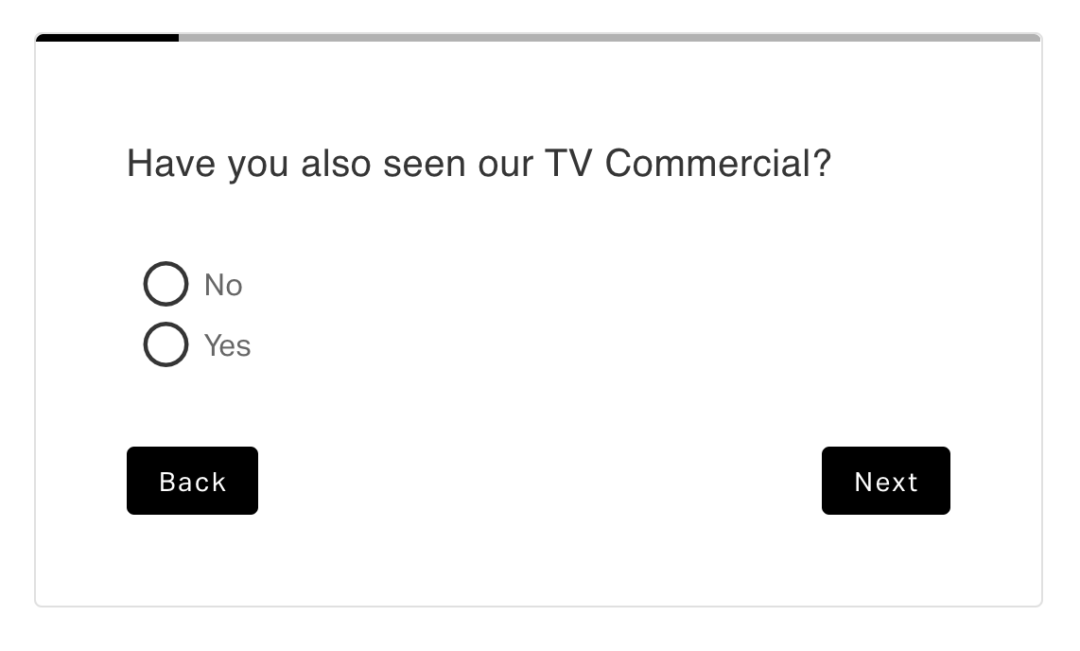
One follow-up question asked where customers saw the campaign that made them click or purchase, with options spanning PR, organic social, TV, and paid ads across Meta and TikTok. The data revealed that TV was driving 3x ROI, which would have stayed invisible without the right question delivered at the right moment.
Immediately after key touchpoints
NPS doesn’t have to be a one-time send tied to a first purchase. Some of the most valuable responses come from moments later in the customer relationship.
Tie your NPS to ongoing campaigns after key touchpoints like:
- A repeat purchase
- A subscription renewal
- A referral being made
- A milestone order like the fifth or tenth purchase
You can trigger these in Klaviyo so the NPS survey fires automatically when the customer hits the event. The signal you get back from existing customers is different than a post-first-purchase NPS. It tells you how loyalty is evolving, and how each support interaction or repeat order shifts the customer relationship over time.
After support interactions
Support interactions are some of the highest-emotion moments in the customer journey. A customer who just had a refund processed, a question answered, or an exchange resolved is in a specific headspace, and that headspace is worth measuring.
Trigger an NPS survey after a live chat ends, a ticket is resolved, or a return is completed. The responses give you a clean read on how customers perceive your customer support team and your brand’s ability to handle friction.
This is also where CSAT and NPS work well together. CSAT measures satisfaction with the specific interaction. NPS measures whether that interaction shifted overall loyalty. Run both, route them differently, and you get a complete picture of customer experience. CES (Customer Effort Score) is another option worth layering in for support touchpoints, since it captures how much work the customer had to do to get an issue resolved.
Before asking for reviews
This one is underused, and it’s one of the smartest moves in an NPS playbook.
More than 99% of American consumers read online reviews before making purchases, and reviews influence 93% of purchasing decisions. Which means the public reviews on your product pages have real impact on conversion, and you don’t want a frustrated customer’s first move to be a one-star review.
Sending your NPS before a review request lets you filter satisfied from unsatisfied respondents. Promoters move into review and referral flows. Passives get nurtured. Detractors get a private outreach, with a chance to resolve the issue before it turns into churn.
You close the feedback loop before negative experiences turn into negative reviews. And the customers who do leave reviews are the ones most likely to leave good ones, which feeds the kind of word-of-mouth and advocacy that drives organic growth. It’s also one of the simplest ways to protect customer satisfaction scores at scale.
On a recurring basis
NPS isn’t a one-and-done send. The best NPS programs run it on a recurring basis, whether that’s quarterly, biannually, or aligned with specific business moments like product launches or pricing changes.
Recurring NPS lets you:
- Measure sentiment around seasonal shifts
- Track how customers respond to pricing or shipping changes
- Compare scores before and after a product launch
- Spot loyalty trends across cohorts and product categories
- Benchmark your NPS results against your own historical performance
KnoCommerce Touchpoints makes recurring NPS easy to set up, with the ability to tie NPS feedback back to Shopify order data for clearer revenue impact. You can track cohort-level and product-level trends in real-time, which is how you spot customer sentiment shifts before they show up in your retention numbers.
Timing best practices
A few principles that hold across every NPS send:
- Send during high-engagement windows. Customers are more likely to respond when they’re already interacting with your brand through email, app activity, or recent purchases. This is one of the simplest ways to lift response rates.
- Keep it frictionless. Embedded email surveys, simple link-based formats, and single-click responses get the best participation
- Don’t over-survey. Too many NPS sends train customers to ignore them, and the responses you do get become lazy or skewed
- Pair scores with qualitative feedback. A score on its own is shallow. The follow-up “why” question is where the insight lives.
How KNO makes NPS in Klaviyo effortless
This is where most NPS programs quietly break.
If your NPS platform doesn’t have proper integrations with your ESP, you’re stuck building surveys manually, exporting CSVs, and trying to stitch responses back to customer profiles after the fact. NPS results don’t get calculated automatically, data lives in silos, and the insights show up too late to act on. Without automation tying the pieces together, NPS becomes another tool nobody opens.
The KnoCommerce and Klaviyo integration closes that gap.
With the integration in place, you can:
- Push survey status and responses directly into Klaviyo so the data sits alongside every other customer attribute you already use for segmentation
- Embed NPS surveys inside your emails so customers can respond with a single click without leaving their inbox
- Trigger NPS flows based on customer actions like an order being placed, a subscription renewing, or a support ticket closing
- Route responses into different downstream flows so Promoters get referral asks, Passives get nurtured, and Detractors get a CX outreach
- Use NPS data for Klaviyo segmentation to build campaigns informed by how customers actually feel
- Connect responses back to your broader customer base so loyal customers and at-risk detractors both get the follow-up they deserve
Instead of NPS sitting in a separate tool that nobody opens, the integration makes it part of the customer flows your team is already running. Actionable insights stay in one place. Trends, sentiment shifts, and retention signals all feed back into the system that drives your revenue.
NPS is only as strong as the timing behind it
Your NPS score isn’t the point. What the score signals, and what you do with it, is.
The brands seeing real value from their NPS programs are the ones treating timing as a strategic decision. They ask after the moments where loyalty is actually forming. They tie the responses to customer profiles in Klaviyo so the data feeds real workflows. And they use NPS as one part of a larger system that also includes CSAT, post-purchase surveys, and attribution data.
When timing, channel, and integration work together, NPS becomes a continuous signal you can use to recover customers, fuel referrals, and improve the product experience.
Want to see how KNO NPS plugs into Klaviyo to make this all work together? Book a demo and we’ll walk you through it.