
The difference between fast-growing brands and their competitors is how they treat customer feedback. The ones serious about growing use feedback as a decision-making tool. Their counterparts use it to put out fires.
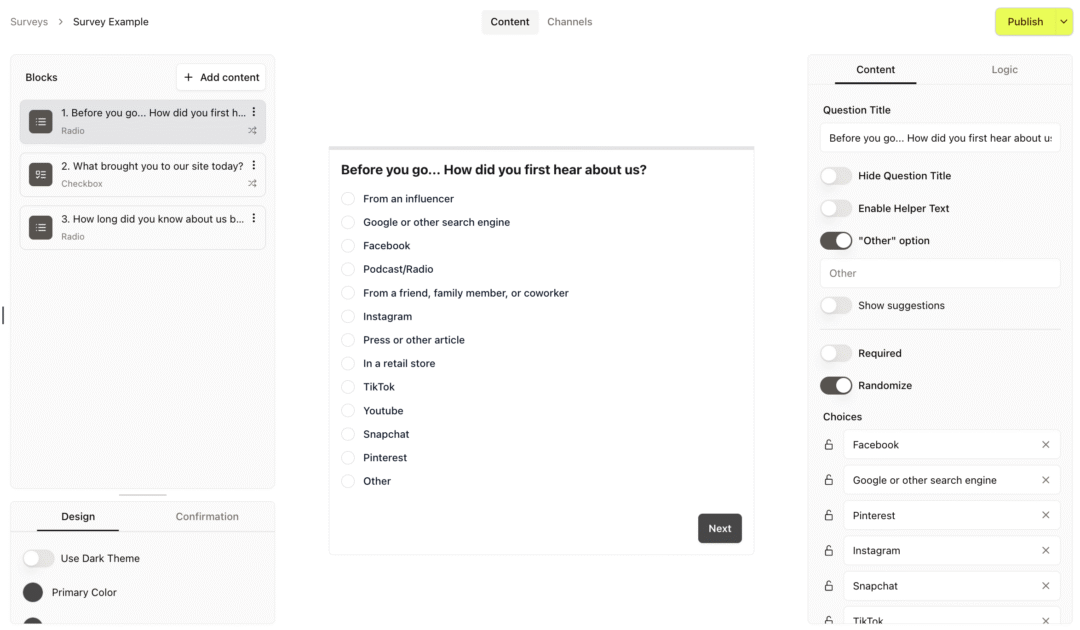
Customer feedback is one of the most valuable sources your business already has, and it’s arguably the key to growing while staying customer-centric. The problem is that most businesses only collect surveys. They don’t do anything else with them. It’s not enough to skim the answers and get a general idea of customer sentiment. You have to make the effort to dig for those actionable insights and tie them to your operations.
We’ll cover why customer feedback is the key to growth, seven ways to turn customer feedback into growth, how different teams can use feedback, and a quick customer feedback strategy to keep coming back to.
Why customer feedback is one of your biggest growth opportunities
If you’re not operating on customer feedback, you’re making decisions based on assumptions.
Using feedback leads to:
- Higher conversion rates, because you’re able to refine the customer journey by removing obstacles and unnecessary steps
- Improved retention, by taking care of real customer pain points
- Lower return rates, by understanding customer expectations (for example, customers may not buy a product because its description is unclear or too similar to another offering)
- Better marketing, by using the language your customers use, grounded in their actual concerns and preferences instead of assumptions
According to PwC’s 2025 Customer Experience Survey, 25% of consumers show loyalty by providing feedback on a brand’s products or services. Loyal customers know what you’re capable of as a brand. They stick around even when things aren’t perfect. They believe in your potential, which is why they’re willing to stay and see changes happen instead of leaving right away. This matters because they’ve been with you long enough to notice changes, from positive ones to friction, and they’re more likely to give feedback with context because of their history with you. Over time, that kind of customer loyalty compounds into stronger retention rates.
7 ways to turn customer feedback into business growth
Customer feedback is waiting to reach its full potential. But you can’t get there by letting it sit and skimming through answers only when there’s a problem. The goal is to move beyond acknowledgment and make real improvements to the customer experience. You don’t need to keep collecting data. You need to sincerely address what customers are saying through changes in your product, experience, marketing, and operations.
1. Identify and remove friction in the customer journey
Start with what customers are already complaining about. Even one complaint can signal a widespread issue that other customers don’t have the energy to express, or are working around in other ways. Either way, friction is friction, and how you resolve it can make a world of difference.
That friction tends to cluster in two places. Before purchase, it looks like unclear product information, an inaccurate product catalog, discounts that don’t work, and clunky UI. After purchase, it looks like confusing checkout steps, unexpected shipping costs, shipping delays, and more UI issues. Pay close attention to the friction that causes customers to abandon their carts or drop off early. The moment you clear the obstacles, the easier it is to get the actions you want: conversions, signups, sales.
2. Improve products based on recurring customer requests
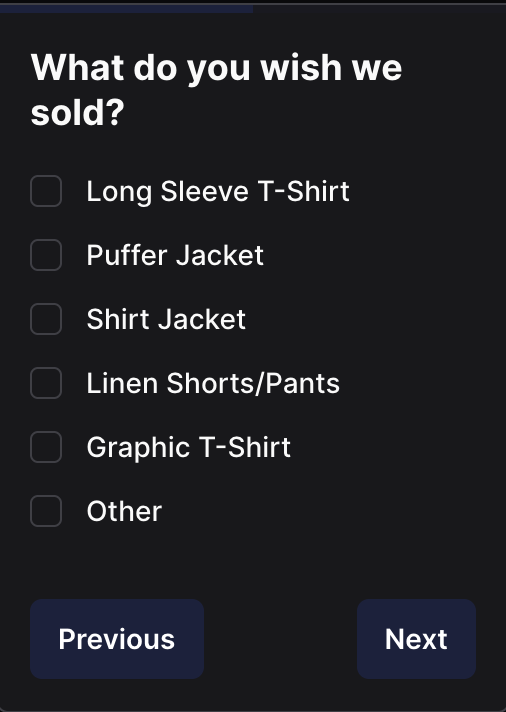
What do customers mention the most? Do they wish your product came in a different color? That your product matching quiz isn’t working? A list of recurring requests lets you prioritize accordingly. This data is essentially your roadmap for product development.
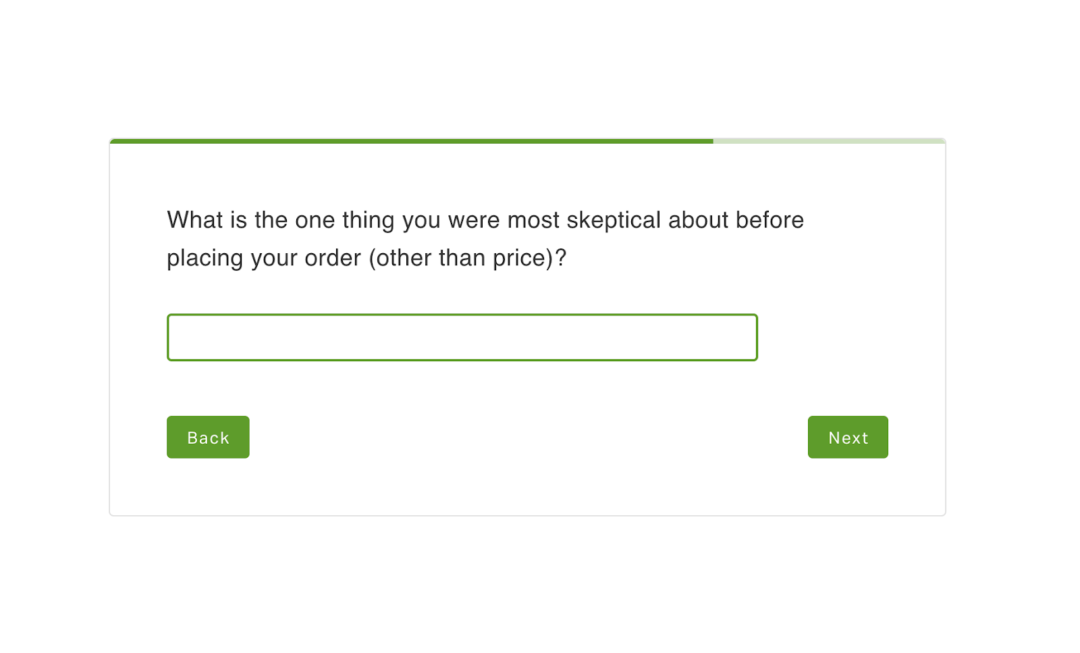
3. Increase conversion by addressing purchase objections
Customers often hesitate due to a lack of information. They’re in the dark, running on assumptions, much like a business that doesn’t use feedback. Without information, customers don’t know what they’re getting, so they simply drop off.
To spot objections, look for hesitation in customer feedback:
- “I wasn’t sure about sizing”
- “I couldn’t find the dimensions”
- “There were no reviews”
- “There are no pictures of the product”
Identify what you’re missing, fill in the blanks, and you unlock stronger product pages, FAQs, promotional messaging, and, most importantly, confident customers.
4. Reduce returns and support tickets
Returns are another issue rooted in a lack of information and gaps in expectation. Dig into feedback from returns and exchanges. Negative feedback here is a gift, since it’s often the clearest signal of what to fix.
Are there common themes about the product not being what they imagined? About packaging? About expecting more of X and less of Y? Then check your website closely. Maybe your PDP shows inaccurate photos, misleading descriptions about capabilities, or unclear instructions. The fixes are often small, like a lighting change in a photo or adding ingredients or dimensions to your PDPs, but they cause a positive domino effect across customer perception, expectations, and satisfaction.
5. Discover your highest-value customer segments
Analyzing survey results gets you top-level insights. The next level involves adding context to those answers through customer segmentation. Each customer is different, from preferences and buying power to demographics, and these attributes can drastically change their feedback.
Divide your respondents by similar traits such as:
- Lifecycle value
- Country
- New vs. returning customer
- Channel (social media, website, in-store, etc.)
For example, a UK-based apparel brand may find a stark difference in preferences between a 40-year-old customer from the UK and a 20-year-old from the US. Issues about shipping fees can arise, and product fit can come up too. Use post-purchase surveys to understand different customer segments, see why customers choose you over competitors, identify your highest-performing channels, and get at customer motivations and hangups.
6. Improve marketing with real customer language
Open-ended questions are the best way to learn your customer’s language. How your customers speak tells you a lot about how they find you online, how they talk about you to people they know, their pain points, what your competitors are doing better, and how to sell your product more effectively.
Use the same phrases, terms, and colloquialisms in your marketing, emails, and product descriptions, and soon you’ll find customer trust and sentiment increase because customers feel understood. According to McKinsey’s Next in Personalization report, companies that prioritize personalization generate up to 40% more revenue than their competitors. That language sharpens everything from lifecycle flows to your paid marketing campaigns. A brand that connects with customers authentically is more trustworthy than a generic brand with no character and no understanding of its audience. The rawest source of that language is open-ended questions in your post-purchase surveys.
7. Prioritize improvements with the biggest business impact
You can’t work on feedback all at once, so use a strategic approach and prioritize. For each issue, ask how frequently it’s mentioned, what it affects (conversion rates, website usability, return rates, customer satisfaction), and which customers it hits (new customers, high-LTV customers, customers in certain regions).
A priority or triage system is the most efficient way to clear through every issue in your feedback queue, because it’s built on guardrails like issue frequency, business impact, customer impact, and end goal, instead of being directionless. Start with the improvement that will make the biggest impact on your business goals, whether that’s revenue, return rate reduction, or a CSAT increase.
How customer feedback helps every team make better decisions
The biggest mistake teams make is gatekeeping feedback. Customer feedback shouldn’t be isolated with your support team. Share it across the business so every department can move as one, under the same context, working toward the same goals.
Marketing teams: improve brand positioning and messaging
Marketing teams often assume what will resonate with customers. But the reality is they’re operating from the opposite side. There’s already a bias to sell, which blurs real customer motivations and pain points. Access to feedback lets marketing learn why customers bought and why they didn’t, pinpoint objections, and learn the customer’s language. That results in more focused advertising, clearer brand messaging, and more intuitive email campaigns and lifecycle flows.
Ecommerce teams: increase conversions and improve the website experience
Feedback lets the ecommerce team quickly improve the shopping experience. Common insights include confusing product descriptions, missing information like sizing, materials, or shipping expectations, poor navigation, and unresponsive websites that hurt the user experience on mobile or tablet. Use these insights to improve PDPs, product hierarchy, and checkout flows.
Product teams: prioritize what customers actually want
What product teams want and what customers want can be two completely different things. Feedback is the equalizer. Product teams should look out for recurring feature requests like color variations, additional capabilities, new material suggestions, or ingredient changes. They should also watch for plain customer wants, like “I wish you sold this shirt in black,” and user experience issues, like “hard to use,” “the zipper is flimsy,” or “order two sizes up.”
Customer support: accelerate response times and reduce tickets
If your support function isn’t up to speed, you risk losing customers fast. In Verint’s State of Digital Customer Experience report, 70% of customers said they would switch to a competitor after a poor experience, and 65% would tell friends and family not to do business with that company.
Support teams can use feedback to fix issues proactively instead of resolving them as they come. What to look for:
- Repetitive questions, which could mean missing information in help docs or a chance to automate
- Frustration from long response times or ignored messages, which may mean SLAs are unclear and muddying customer expectations
- Confusion or frustration after purchase, which points to a lack of order-tracking automation like confirmations, tracking, and shipping notifications
Get ahead of those and you’ll see fewer repetitive tickets, faster resolutions, and more comprehensive self-serve resources like FAQs and help centers.
Operations and fulfillment: improve the delivery experience
Operations teams often only see problems when they escalate. Feedback gives them the space to act before issues compound. Customers frequently flag shipping delays or unclear delivery expectations, packaging issues or damaged goods, and inventory inconsistencies or order errors. These insights help improve fulfillment processes, packaging decisions, and carrier and logistics partnerships. The result is fewer avoidable breakdowns in the post-purchase experience.
Leadership: inform business goals
At the leadership level, feedback becomes a way to validate what’s actually driving or blocking growth. It helps answer where you’re losing customers and why, what the biggest driver of repeat purchase behavior is, and which parts of the experience are worth investing in next. Instead of relying purely on dashboards or lagging metrics, leadership gets the qualitative explanations behind the numbers, which leads to more informed decisions.
The simple customer feedback strategy to keep coming back to
Be consistent. Collect the right insights at the right times, then share them across the business.
1. Collect feedback at the right moments in the customer journey
Don’t surface surveys at random moments. Weave them into the customer journey when customers have fresh context. The best moments are right after purchase, preferably on the checkout page, after the product has been delivered while anticipation and excitement are high, and after first use, when you can gauge first impressions.
2. Find the why
CSAT, or customer satisfaction score, surveys are useful for getting a sense of customer sentiment, but they don’t come with reasons. Just a clear-cut number and no other context. The same is true of NPS: a Net Promoter Score tells you how likely someone is to recommend you, not why they feel that way. Strong follow-up questions let customers explain the motivations behind their actions:
- Why did you buy this product today?
- What almost stopped you from purchasing?
- What would have made your experience better?
3. Group feedback into themes
Sifting through survey answers can be overwhelming. Give direction to your efforts by looking for patterns. For example, you can group answers to the question “why did you abandon your cart?” into buckets like pricing concerns, competitor preference, website experience, and shipping fees.
Pattern recognition makes it easier to read customer sentiment, spot recurring issues, and prioritize the high-impact decisions first.
4. Share insights across teams, not just CX
Feedback is a resource better shared than hoarded. Make it a habit to share insights with marketing for messaging and acquisition, product for the roadmap and features, ecommerce for conversion optimization, and operations for fulfillment and delivery. The same insight often creates impact in multiple areas at once.
5. Turn insights into actions and track what changes
Insights are potential actions. Only when you carry out these actions can you see improvement. For every major insight, build simple action plans: identify what needs to change, assign an owner, and track whether the change improved outcomes like conversion, retention, or support volume.
Over time, this creates a loop where feedback continuously improves performance instead of just reporting on it, which is what closing the feedback loop actually means. One habit worth keeping: send a new survey after a few weeks or months to see whether the changes made a difference. Qualitative feedback is invaluable here for finding out whether the changes should stick or if you should pivot.
Turn customer feedback into a competitive advantage
Businesses grow not because they collect more feedback, but because they consistently turn customer insights into real business improvements across products, marketing, operations, and customer experiences. That’s how you create loyal customers and build an ecommerce growth strategy that compounds into a lasting competitive advantage.
Ready to put your feedback to work? Book a demo and start turning answers into action.