
You can’t skip ahead to loyalty. Customers have to decide you’re worth it first.
Most ecommerce teams picture the journey as a tidy line: awareness, consideration, purchase, retention, and advocacy. But there’s a stage hiding in the middle that rarely gets its own slide in the strategy deck. Post-purchase evaluation is the stretch between buying and coming back, the moment a customer quietly decides whether your brand earned the money.
It carries more weight than it gets credit for. Deloitte found that consumers spend 37% more with brands that deliver consistent, positive experiences than with brands that don’t. What happens after checkout shows up directly in long-term revenue. The brands that treat this window as an afterthought leave repeat revenue on the table, and most of them never realize it’s happening.
So that quick stage everyone races past?
That’s exactly where the repeat revenue hides.
What did customers think of the product? What would they change? What should stay exactly as it is? Their answers help you refine the post-purchase experience, close the feedback loop, and build something people come back to.
What is post-purchase evaluation?
Post-purchase evaluation is the process customers go through after buying and using a product to decide whether it met, missed, or beat their expectations. It sits between the moment of purchase and your customer retention efforts, and it quietly determines whether you get a second order or a return.
While they’re forming that judgment, customers are running through a handful of questions:
- Was the product like it looked online?
- Did it arrive when I expected?
- Is the quality worth the price?
- Did the whole experience live up to what I hoped?
- Would I recommend it to someone?
- Would I buy from this brand again?
The answers push them toward one of a few outcomes: buying again, leaving a review, telling a friend, returning the item, or drifting to a competitor. Put simply, a positive evaluation usually means you’ve designed an experience worth repeating.
This is also the stage where post-purchase dissonance can creep in. That’s the quiet second-guessing, sometimes called cognitive dissonance or plain buyer’s remorse, that hits when a customer wonders whether they chose right. Left alone, it feeds returns and one-and-done buyers. Handled well, it turns into reassurance and repeat customers.
Why post-purchase evaluation is important
Every piece of feedback loops back into the customer journey. Once you understand what customers enjoy and where things fall short, you can sharpen each stage that follows. Here’s what makes this stage worth the attention.
It turns feelings into data you can use
Each survey response is a direct read on what customers actually think about your product, your service, and your brand. Real answers, not assumptions. Sort those responses by product, campaign, cohort, or acquisition channel and patterns surface that aggregate analytics would bury.
The good news is that people are willing to talk when you catch them at the right moment. A tight post-purchase survey routinely sees completion rates near 90%, so the raw material is there. You just have to collect it.
It reveals what analytics can’t
Your analytics platform can tell you what customers did. It can’t explain why they were thrilled or let down. A post-purchase survey answers the questions the dashboard leaves open: why a product keeps landing at three stars instead of five, what nearly killed the sale, why some buyers deliberate for weeks, or what shaped the final purchase decision and why they picked you over the brand in the other tab. Pair behavioral data with that context and you finally see the whole journey. According to Gartner, 81% of consumers provide feedback at least some of the time when companies ask them to complete a survey.
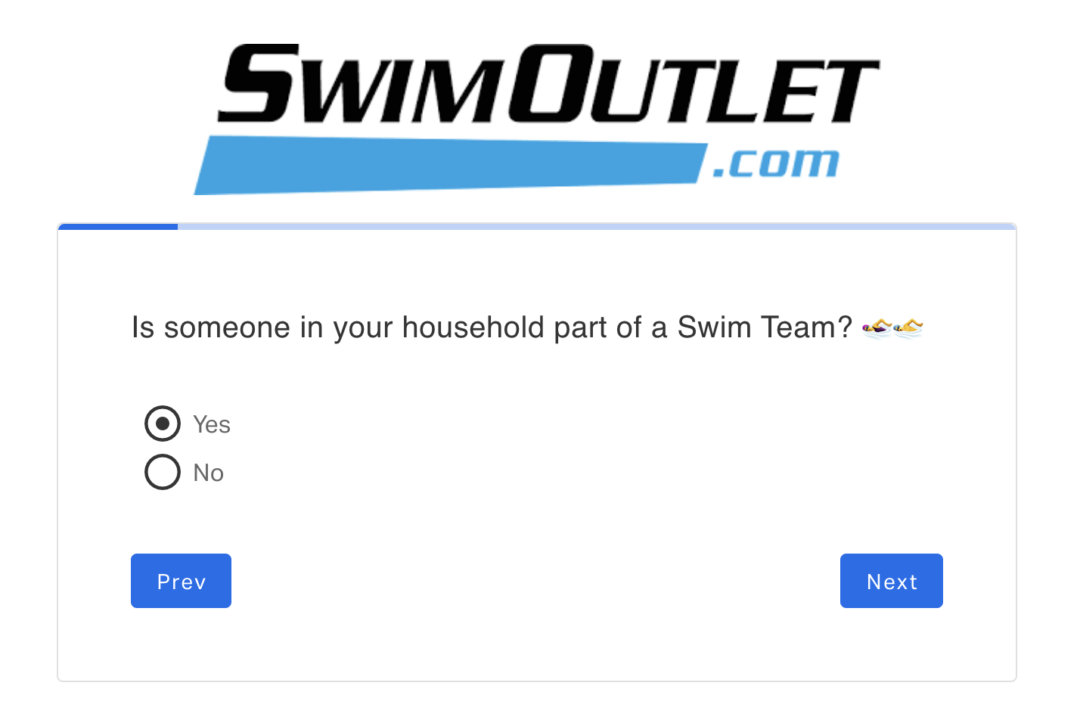
Swim Outlet is a good case in point. The team had built its marketing around the assumption that roughly 80% of buyers were competitive, team-affiliated swimmers. Post-purchase responses put the real split at 51% team-affiliated and 49% recreational, which surfaced an entire audience they hadn’t been speaking to. No dashboard was ever going to catch that gap.
It improves retention and lifetime value
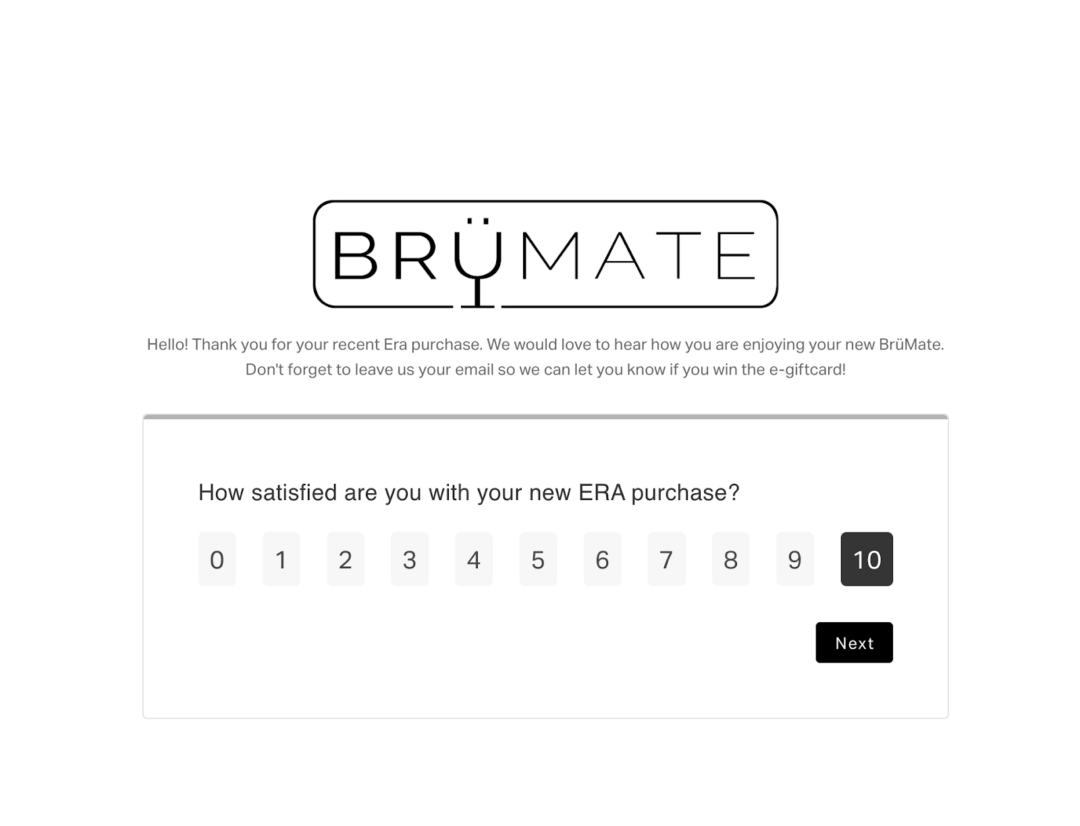
A customer’s evaluation often decides whether there’s a second purchase at all. This is the heart of customer lifetime value. Survey data helps you spot the experiences that lead to reorders, subscriptions, and referrals, and it surfaces the reasons people quietly leave. Catch those reasons early and you can fix the leak before churn turns into a trend. BrüMate used post-purchase satisfaction surveys to figure out what actually pulled customers back, then fed those insights straight into its loyalty program. That’s the difference between reacting to lost customers and building ones that stick around.
The payoff compounds over time. Across data from more than 6,000 Shopify brands, KnoCommerce has found that customers who’ve known a brand for over a year spend about 25% more than those who just discovered it. The relationships you protect at the evaluation stage are the ones funding next year’s growth.
It leads to better business decisions
Post-purchase data doesn’t just help marketing. It informs product, ecommerce, and support too, and it can talk teams out of expensive mistakes. Teams use it to improve product pages and messaging, tighten fulfillment, prioritize the product fixes that matter most, refine onboarding, and measure whether changes actually moved the needle over time.
Laura Geller Beauty is a good example. Before committing to a costly site redesign and a full model reshoot, the team simply asked customers whether the imagery felt outdated. Around 90% said they still connected with it, which saved the brand tens of thousands of dollars and a project it didn’t need. That’s one survey question standing in for an expensive guess.
What factors influence post-purchase evaluation?
Pre-purchase factors like detailed product pages, reviews, and clear pricing shape whether a brand feels worth returning to. But the window right after checkout is still yours to shape. The right moves reinforce trust, ease buyer’s remorse, and turn a first order into a habit.
1. Transparent post-purchase communication
The hours after purchase are when customers look for proof they made the right call. Keep them in the loop with a clear order confirmation, accurate delivery timelines, reliable tracking, and a heads-up the moment anything slips. The fastest way to sour an evaluation is to leave someone wondering whether their order even went through.
2. Proactive product education
Set customers up to win with the product before it lands on the porch. Answer the common questions early, share setup guides, pass along usage tips, and point out benefits they might not stumble on themselves. Assuming people already know how to get the most from what they bought is how good products earn mediocre reviews.
3. Policy visibility
Risk reversal is underrated. Reminding customers of a generous return policy or money-back guarantee after they buy eases the pressure, and knowing they can return something often makes them less likely to do it. Save that reminder for before anyone’s unhappy, not after.
4. Responsive support and resolution
Questions often arrive before the product does, from shipping hiccups to how-to-use-this basics. The way you handle them lands squarely in the evaluation. Make support easy to reach, reply quickly, resolve with a little empathy, and follow up once it’s sorted. Making someone repeat their problem three times does the opposite.
How to measure post-purchase evaluation
Measuring this stage gives you a straight read on what customers expected, what they got, and what tips them toward a repeat purchase. A few methods work well together.
Customer satisfaction metrics
Most brands start here because it takes just one question. Low effort for the customer, quick math for your team. Three scores cover most of what you need: Customer Satisfaction Score (CSAT) for overall satisfaction, Net Promoter Score (NPS) for how likely someone is to recommend you, and Customer Effort Score (CES) for how easy it was to get something done. Track them over time and you can tell whether your changes are improving sentiment or not. Pick the one that maps to your question, ask it consistently, and watch the trend rather than any single month’s number.
Post-purchase surveys
Rather than guessing why people bought or why they didn’t come back, ask. A short survey is one of the most direct ways to understand the evaluation while it’s still happening. Questions like how customers found you, what convinced them to buy, whether the product met expectations, and what they’d improve give you qualitative and quantitative data you can slice across products, segments, and channels. The real value is in the follow-up. A rating gives you the temperature. An open-ended “what could we have done better?” hands you the fix. If you’re not sure where to start, our question bank has 200+ examples.
Customer reviews
There’s no better read on sentiment than customers’ own words. Online reviews reveal patterns around product quality, the delivery experience, customer expectations, and the gaps worth closing. Just remember reviews skew toward the highly motivated, so you’ll often see a pile of raves and a cluster of complaints with less in between.
Behavioral data
Actions tell you whether the experience actually built loyalty. Repeat purchases, subscription sign-ups, returns, refund requests, and support tickets all signal how the evaluation shook out. Behavioral data tells you what happened. Surveys tell you why.
How to turn negative feedback into loyalty
No matter how strong the product is, some evaluations land negative. How you respond changes what that customer does next, and it’s often where customer loyalty is won or lost.
Respond fast and acknowledge it
When someone shares a bad experience, they want to feel heard as much as they want a fix. Acknowledge the frustration, take ownership, apologize where you fell short, and get to a resolution quickly. There’s a reason it’s called the service recovery paradox: a problem handled exceptionally well can leave a customer more loyal than one who never hit a snag at all.
Use trends to fix things at scale
One frustrated comment is a data point. The same complaint five times is a roadmap. Watch for recurring themes around product quality, fulfillment, confusing site copy, or a gap between what marketing promised and what showed up. Then fix the root cause so the next hundred customers never run into it.
Turn recovered customers into advocates
A well-handled problem can create some of your most vocal fans and a genuine source of word of mouth. Once you’ve won someone back, invite them to leave a review, flag them as a candidate for brand advocacy, and collect the testimonial about how your team showed up. Recovery stories tend to be some of the most convincing proof you have.
Close the loop so feedback actually does something
Collecting responses is only half the job. The evaluation pays off when each answer triggers the next move on its own, instead of waiting in a spreadsheet for someone to notice it.
The pattern most brands land on is simple. A low score or a flagged complaint routes to your support team so they can step in before the customer churns. A high score, or a strong net promoter score response, flows into a referral or review request while the goodwill is fresh. Product feedback gets tagged and sent to the team that can act on it.
When those routes are wired up ahead of time, a single survey response can update a Klaviyo segment, open a Gorgias ticket, or kick off a win-back flow without anyone lifting a finger. That’s the line between brands that measure post-purchase evaluation and brands that actually improve it.
Use post-purchase data to create customers for life
Your biggest customer retention opportunities are the customers you already have. They’re ready to tell you what convinced them to buy, what they love, and what could be better. You just need a way to capture that customer feedback and act on it.
KnoCommerce makes the whole loop simple. You get post-purchase surveys with built-in templates, conditional logic that adapts to each answer, and integrations that push responses into Klaviyo, Shopify Flow, and Triple Whale so the data does something instead of sitting still.
Start collecting the feedback your customers are already willing to give. Try KnoCommerce free for 7 days and see what they can teach you.
Frequently asked questions
How do I know if my post-purchase evaluation strategy is actually working?
A working strategy tells you not just what customers think but why. Look for insight into their motivations, expectations, and behavior, then use it to improve the experiences that shape satisfaction and repeat purchases. If your feedback is changing decisions, it’s working.
Which customer segments should I analyze in post-purchase data?
Slice post-purchase insights by first-time versus returning buyers, product purchased, acquisition channel, order value, or demographics. Segmentation surfaces differences in motivation and satisfaction you’d miss in the aggregate.
How can ecommerce teams share post-purchase insights across departments?
This data is most valuable when marketing, product, customer experience, and leadership all see it. A consistent reporting cadence keeps customer insight in front of the people making decisions.