
Your Shopify analytics can tell you what customers did. It can’t tell you why.
Why they almost left. Why they came back. Why they bought from you instead of the competitor they had open in another tab.
That’s the gap surveys fill. But only when you ask the right questions. The difference between a mediocre customer satisfaction survey and one that actually drives decisions isn’t just timing or placement. It’s the quality of what you ask.
Privacy changes have made this more urgent than ever. Cookie opt-outs and iOS updates have left real gaps in attribution, with some studies showing analytics tools undercounting actual traffic by as much as 35% to 95%. Zero-party survey data, insights customers willingly share, has become one of the most reliable signals available to ecommerce brands.
Below are good survey question examples across four major use cases, with notes on what makes them work and how real brands have used them to make better decisions.
What makes a survey question good?
Before you can write good survey questions, it helps to understand what separates an effective one from a weak one.
A good ecommerce survey question is actionable, specific, and tied to a real business decision. The answer should tell you something you can actually do something with. That applies whether you’re collecting quantitative data from multiple choice questions or qualitative data from open-ended questions that let customers respond in their own words.
A question fails when the answer leads nowhere. “Did you enjoy your experience?” is the most common example. A “no” response doesn’t tell you whether the issue was price, trust, shipping, or UX. You can’t fix what you can’t isolate. Vague questions don’t just produce unhelpful data. They also hurt response rate because respondents don’t know what you’re actually asking.
Watch out for double-barreled questions too. Asking “Was the checkout process fast and easy?” in a single question is a trap. If a customer found it fast but confusing, there’s no honest way to answer questions like that. Split them out.
Similarly, leading questions and biased questions skew your results before you’ve even collected them. “How much did you love our new product?” is leading. “What did you think of our new product?” is neutral. The framing matters.
Before writing any questionnaire, ask yourself: what would I do differently based on the answer? If you can’t answer that, the question probably isn’t worth asking.
The good news is that you don’t need many questions to get meaningful data. A five to six question post-purchase survey, built this way, typically reaches completion rates around 90%. Keep it tight, keep it purposeful, and you’ll get responses worth acting on.
Good vs. bad survey questions: a quick comparison
| Weak | Stronger | Why |
| Did you enjoy your experience? | What nearly stopped you from buying? | Isolates friction instead of measuring overall sentiment |
| What do you think of our product? | What features do you wish this product had? | Specific, easy to categorize, useful to a product team |
| How was your experience? | Did you face any obstacles during checkout? | Ties feedback to a specific step in the funnel |
The pattern: stronger questions are built around a decision. Weaker ones are built around a feeling.
Now let’s get into the specifics by use case.
Good attribution survey question examples
Purpose: Understand how customers discovered you and what influenced their decision to buy.
Attribution is where survey data most directly fills the gap left by platform reporting. 82% of organizations say privacy changes have hurt their attribution accuracy. Post-purchase surveys give you a real-world cross-check against what your dashboards are showing, and they often surface channels your analytics are consistently undervaluing.
Podcast ads, organic social media, word of mouth, and influencer content are all notoriously undercounted by platform tracking. When a customer tells you they found you through a friend’s recommendation, that data point doesn’t exist anywhere in your Shopify or GA4 reports. It only exists because you asked.
A few things to get right here. Use multiple choice questions, not a text box. “How did you find us?” with open-ended answer options creates unnecessary friction and produces answers that are nearly impossible to compare at scale. Break out your social channels individually. TikTok, Instagram, LinkedIn, and Facebook tell different stories. “Social media” as a catch-all tells you nothing useful. And when your channel mix changes, update your answer choices. If you launch an influencer program, add “Influencer / Affiliate” as a choice.
One more thing to watch: when your survey data and platform reporting diverge, the survey is often closer to the truth. Don’t dismiss the discrepancy. Investigate it.
Good attribution survey questions:
- How did you first hear about us?
- Where did you discover us?
- What made you decide to buy today?
- Was there another brand you were considering?
- Why did you choose to buy from our website instead of Amazon?
- How long did you know about us before making your first purchase?
These questions reveal buying motivation, surface competitive threats, and help you understand the full path to purchase, not just the last click.
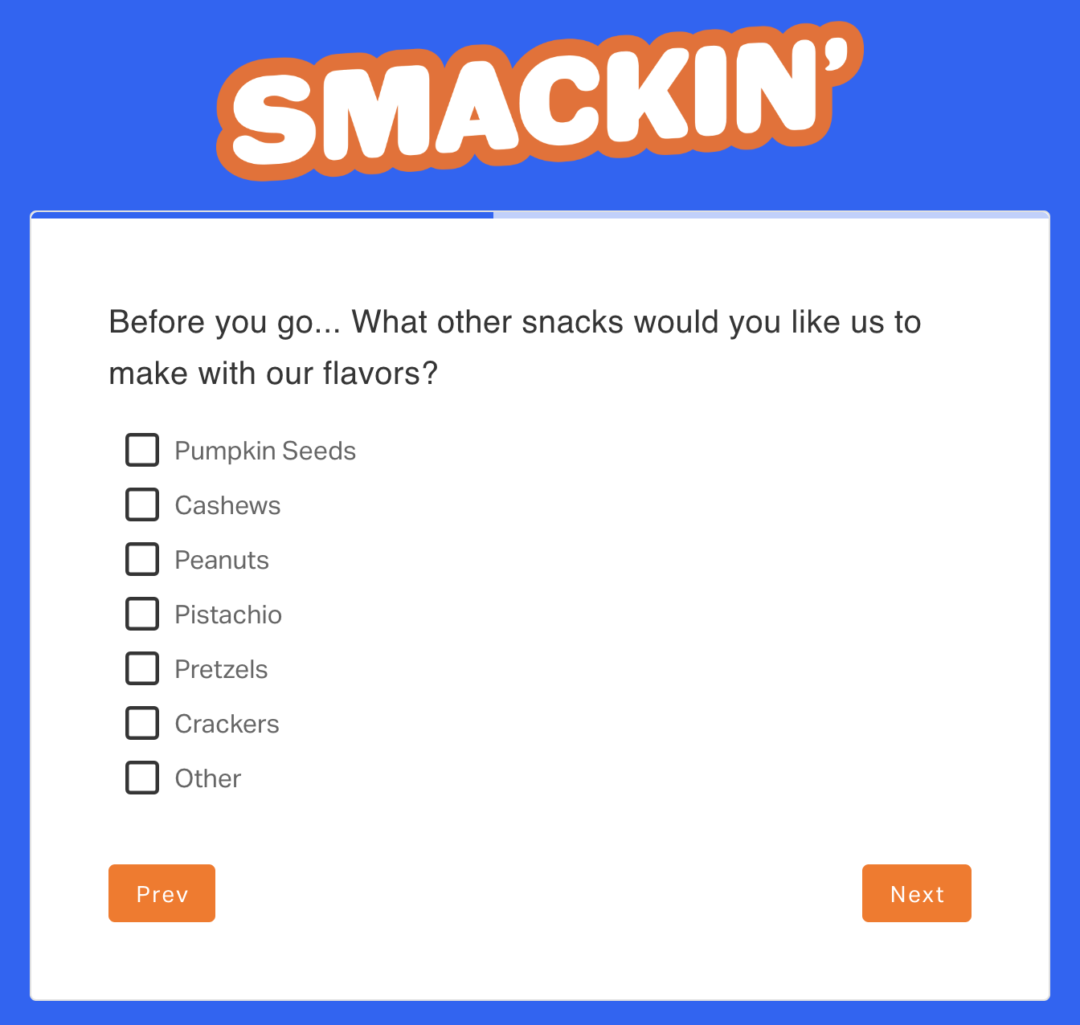
Smackin’ used attribution surveys to understand the lag between discovery and conversion. When they asked customers how long they’d known about the brand before buying, 70% said more than a month. That single data point reshaped their entire ad funnel strategy, shifting from a short-term conversion model to a three to six month horizon. They stopped optimizing for immediate returns and started building for the longer consideration cycle their customers actually had.
Good CRO survey question examples for ecommerce
Purpose: Identify friction in the customer journey and understand what drives purchase decisions.
The problem with broad satisfaction questions is that they can mean anything. A customer who hit a surprise price discrepancy or unexpected shipping fee at checkout might rate their overall experience poorly, but you won’t know that’s the specific issue without asking about checkout directly. Everything rolls up into a sentiment score that points you nowhere.
The best CRO questions isolate a single moment in the funnel. When you ask “What nearly stopped you from buying?” and collect 300 responses, you can sort them by frequency and build your testing roadmap straight from the results. Shipping policy concerns at the top of the list? That’s your first test. Sizing uncertainty coming in second? That’s your second. You’re not running A/B tests based on intuition. You’re working from a stack-ranked list of actual customer feedback.
There’s a second benefit that often gets overlooked. When customers describe what mattered most in their purchase decision, that language frequently becomes your best-performing ad copy. You’re not guessing at what resonates. You’re pulling the exact words your customers already use to justify the purchase to themselves.
Understanding types of survey questions matters here too. Closed-ended questions like “Did you find what you were looking for? Yes / No” give you clean quantitative data fast. Open-ended questions with a text box give you the texture and context behind the numbers. The most effective survey design for CRO uses both.
Good CRO survey questions:
- What nearly stopped you from buying?
- Did you face any obstacles during checkout?
- Were you able to find what you were looking for?
- What was most important when choosing to buy from us?
Map responses to specific SKUs and pages, not just the brand overall. A friction point on one product page won’t show up in aggregate feedback. You need the detail to know where to look.
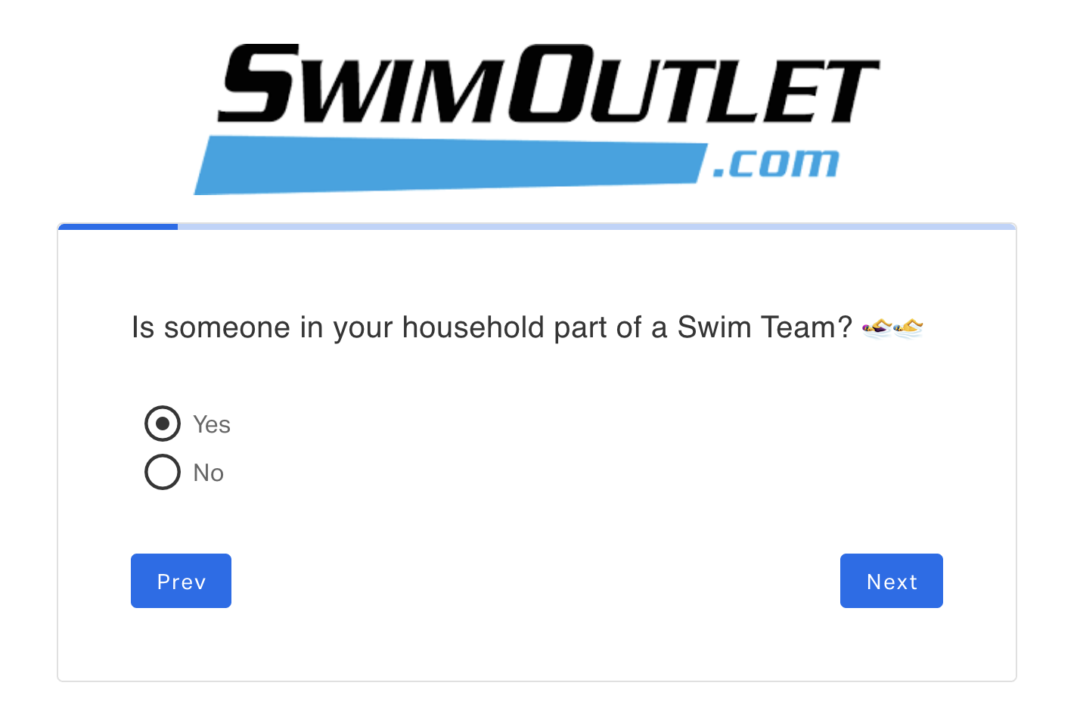
Swim Outlet had built their entire marketing strategy around an assumption: roughly 80% of their customers were competitive swimmers affiliated with a swim team. Post-purchase surveys told a different story. The actual split was 51% team-affiliated and 49% recreational buyers. That finding revealed an entire audience segment they hadn’t been speaking to, and gave them the data to back a meaningful pivot in how they positioned the brand.
Good retention and loyalty survey question examples
Purpose: Drive personalization, inform lifecycle segmentation, and increase customer lifetime value.
The default post-purchase flow treats every customer the same. Same email, same timing, same offer. But a first-time buyer, a repeat customer, and someone who bought a gift have completely different contexts. Without asking, you’re guessing at which is which, and sending the wrong message at the wrong time.
Retention questions let you route customers correctly from day one.
Know someone bought a gift? Don’t send a reorder reminder two weeks later. Know someone buys this product category every two months? Time your follow-up to match their actual cycle, not a default 30-day cadence. Know someone scored you a 9 on NPS? Put them in a referral flow, not a win-back sequence.
The key is connecting survey responses to your email or SMS platform so the data actually triggers something. If responses sit in a dashboard and never flow into a Klaviyo segment or a Shopify Flow automation, the value disappears.
One thing to avoid: hypothetical intent questions like “Will you buy again?” Focus on context and motivation instead. Those answers give you something concrete to act on right now.
Likert scale questions and rating scale questions work especially well for retention. A strongly agree to strongly disagree scale on satisfaction, or a 1 to 10 likelihood-to-recommend score, gives you quantitative data you can segment and track over time. Pair them with an optional open-ended follow-up question and you get the number and the story behind it.
Good retention and loyalty questions:
- Was this purchase for yourself or as a gift?
- How often do you purchase products like this?
- How likely are you to recommend us? (Net Promoter Score)
- What would make you purchase again?
NPS deserves a closer look. Low scores should trigger customer support outreach before a complaint becomes a public review or a churn event. High scores identify customers who are already willing to put their reputation behind your brand. Those are your best candidates for review requests, referral programs, and loyalty enrollment. Collecting the score without building a response flow around it wastes the most actionable data in your entire survey.
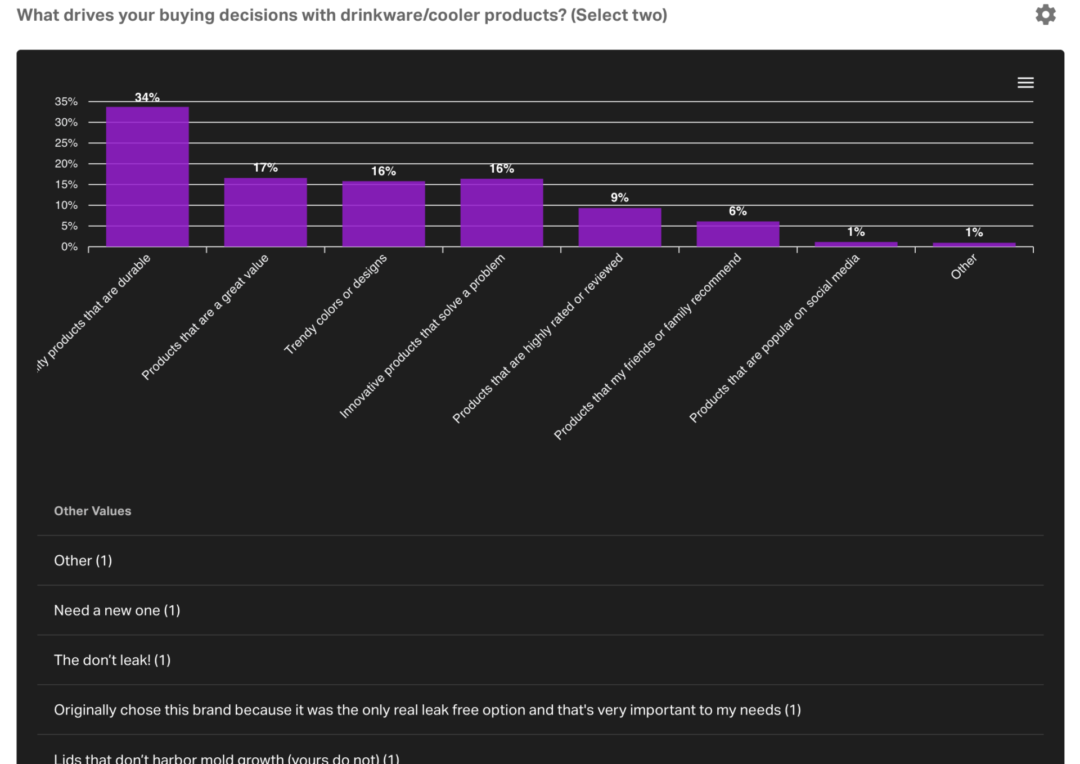
BrüMate used post-purchase satisfaction surveys to understand what brought customers back. The insights fed directly into their loyalty program development and helped them understand which experiences and products drove the strongest repeat purchase behavior. The result was a more targeted retention strategy built on what customers actually told them.
Good product development survey question examples
Purpose: Improve product-market fit, detect quality issues early, and validate new variations before investing in production.
A customer who just received your product is your most valuable market research resource. The challenge is asking in a way that produces actionable insights rather than a pile of scattered responses your product team can’t do anything with.
Vague prompts generate vague answers. Specific questions produce responses that can be grouped, themed, and turned into a prioritized development list. Think about your target audience for each question too. A first-time buyer will have different product feedback than someone on their fourth purchase. Demographic questions like “How long have you been a customer?” or “How often do you use this product?” add context that makes the rest of the responses more useful.
Tie responses to specific SKUs rather than rolling everything up to the brand level. If one color variant keeps generating complaints and another doesn’t, you need to see that split. A spike in negative feedback tied to a specific product batch is a quality control signal. The detail is where the value is.
Feature requests need a system. Customers often suggest things that are genuinely useful but don’t fit your current roadmap. Capture everything, but build a way to categorize and prioritize so your product team is working from frequency and strategic fit, not whoever responded most recently.
Good product development questions:
- What features do you wish we offered?
- What do you like most about this product?
- What do you dislike about this product?
- What sizes, colors, or variations would you like next?
- What nearly stopped you from buying this specific item?
When customers request specific colors or sizes in meaningful volume, that’s a lower-risk signal for a product line extension than an internal assumption. You’re validating demand before you commit to production costs.
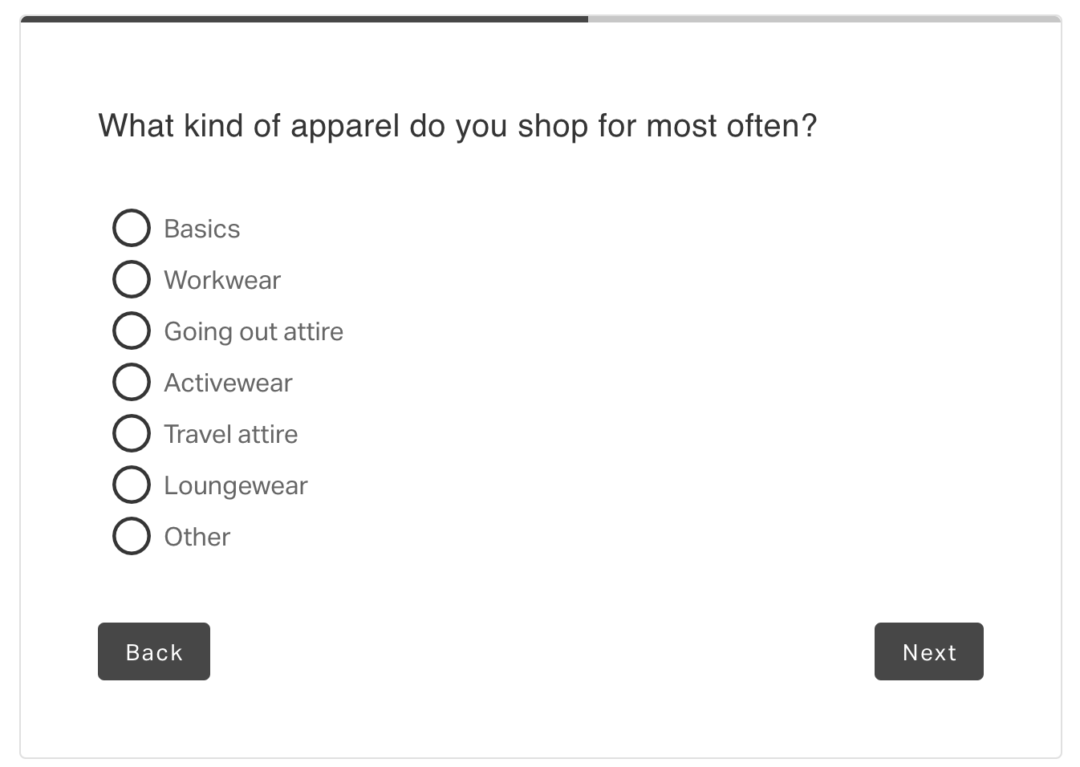
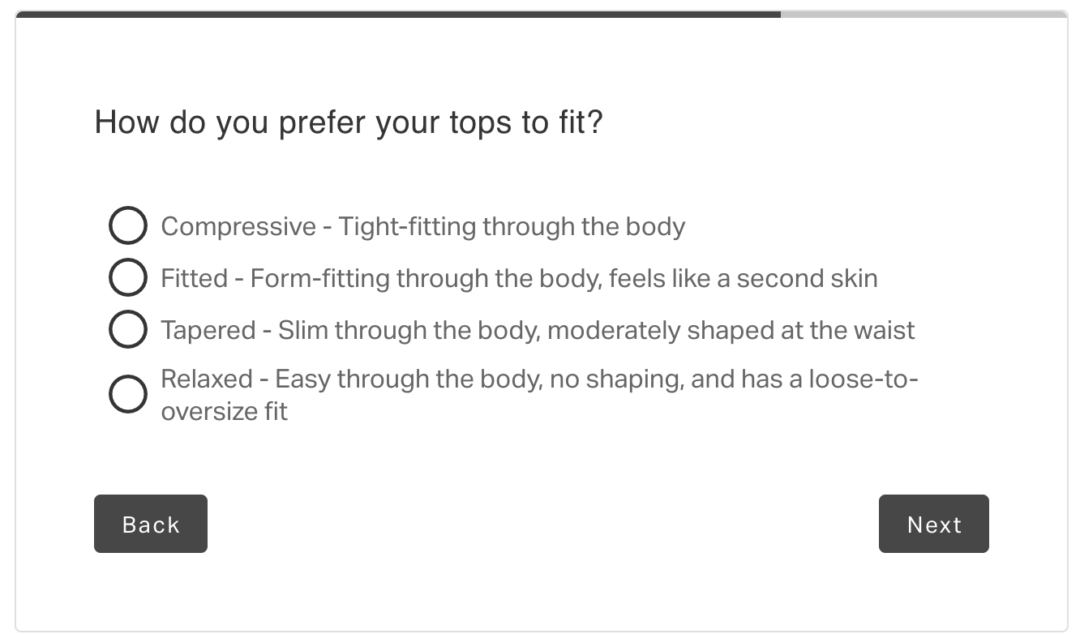
Bylt Basics asked customers how they prefer their tops to fit and discovered that a meaningful number of women were buying from the men’s line. That insight shaped how they positioned and marketed the entire women’s collection going forward, changing not just copy but product development priorities across the organization.
Turning survey responses into revenue
Good questions are the starting point. The value compounds when responses flow into the tools your team is already using.
Surveys that live in a standalone dashboard are a missed opportunity. The data needs to move. A customer’s CSAT score or post-purchase response should be able to trigger a Klaviyo flow, inform a Meta lookalike audience, or surface in a Triple Whale attribution report, without anyone manually exporting a CSV.
That’s what separates brands that collect customer feedback from brands that act on it.
With KnoCommerce, post-purchase online surveys sync directly with Klaviyo, Shopify Flow, Triple Whale, and other platforms. Survey templates for attribution, CRO, NPS, CSAT, and product feedback are built in, so you’re not starting from scratch. Effective survey questions are already structured and ready to deploy, with conditional logic that adjusts the questionnaire based on how each customer responds for a more in-depth view of your audience.
What that looks like in practice:
- Survey builder and templates. Multiple types of survey questions, conditional logic, and pre-built survey templates for attribution, CRO, NPS, CSAT, and product customer feedback.
- Advanced reporting and segmentation. Filter survey data by SKU, product, demographic, or purchase behavior to find the patterns that matter.
- Actions. Trigger automated flows based on response options, including review requests, referral invites, loyalty enrollments, and post-purchase offers.
- Integrations. Push zero-party data into Klaviyo for segmented email flows, Triple Whale for attribution reporting, and Shopify Flow for automated actions.
- Zero-party data capture. Fill the attribution gaps that cookies and platform tracking leave behind, with data customers willingly provided.
The brands seeing the strongest results aren’t just asking better questions. They’re building systems where the answers actually do something.
Ready to start asking better questions? Book a demo to see how KnoCommerce helps ecommerce brands build surveys that drive real decisions.