
Analytics tell you what customers did.
A customer feedback survey tells you why.
For ecommerce brands trying to improve customer satisfaction, reduce churn, and strengthen customer loyalty, understanding motivation matters just as much as tracking behavior.
Customer feedback surveys provide survey data that enables ecommerce brands to make data-driven decisions and optimize any point of the customer journey. From acquisition to customer retention, understanding how customers experience your brand is critical to improving performance.
This guide breaks down what a customer feedback survey is, why it matters, how to design one strategically, and what to do with the data you collect.
What is a customer feedback survey?
To understand how to improve your brand, products, and service, you need to hear directly from your customers.
A customer feedback survey, sometimes referred to as a customer satisfaction survey, is a structured questionnaire designed to measure customer satisfaction, understand the experience customers had with your brand, identify pain points, and determine whether their customer needs and customer expectations were met.
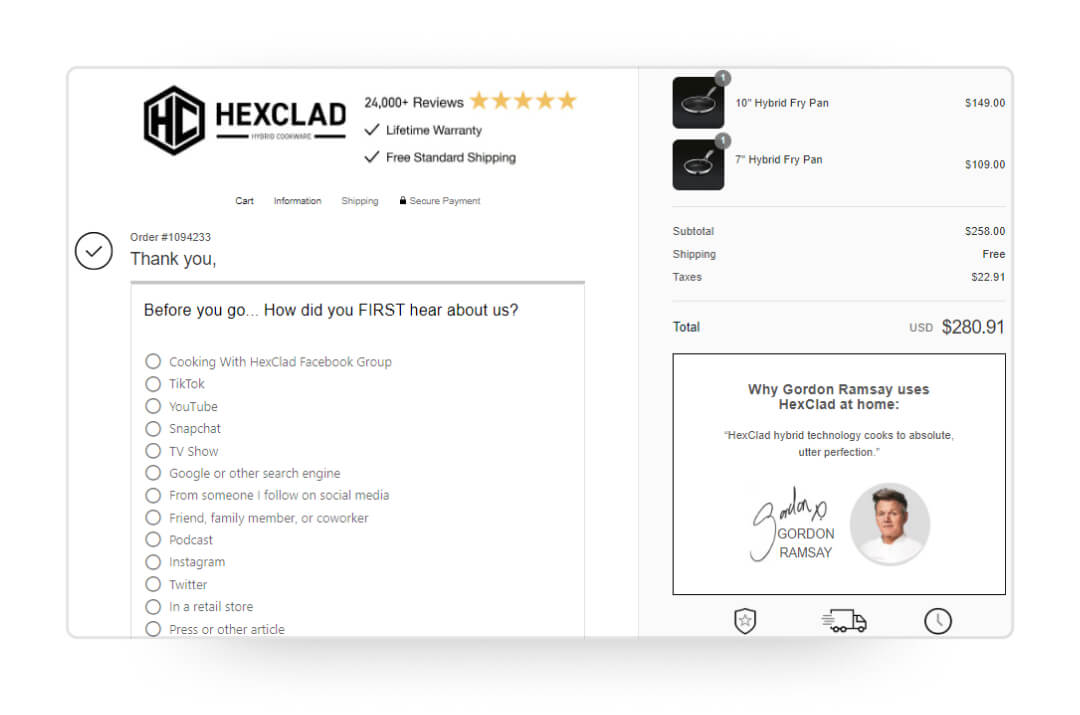
At its core, a feedback survey exists to collect customer feedback that informs better business decisions. These surveys can take many forms, including multiple-choice questions, rating scales, likert scale questions, and open-ended questions that allow customers to answer in their own words.
For ecommerce brands, customer feedback surveys are most often sent post-purchase as an online survey. Common delivery methods include email, SMS, pop-ups, or in-app prompts inside a mobile app, giving customers a chance to share their thoughts while the experience is still fresh.
When designed correctly, surveys help customers feel heard, improve customer relationships, and create better alignment between product teams, support teams, and marketing.
Why listen to us?
We’re Knocommerce, an ecommerce survey platform built for brands to measure customer satisfaction, identify pain points, and improve the customer experience using real-time survey data.
With over 6,000 brands using Kno, we’ve studied what separates high-performing brands from those struggling with churn. The difference often comes down to asking the right questions, segmenting the target audience correctly, and activating feedback through smart workflows and integrations.
When you’ve reviewed millions of survey responses, patterns become clear.
Types of customer feedback surveys
Not all customer feedback surveys serve the same purpose. The type of survey you send should depend on what you are trying to learn.
Transactional surveys
Transactional surveys capture immediate feedback related to a specific interaction, most commonly a purchase, often through post-purchase surveys.
These surveys are ideal for ecommerce brands looking to understand a precise moment in the customer journey, such as overall satisfaction, ease of use, checkout experience, delivery performance, or specific product feature reactions.

Common examples include:
- CSAT surveys (Customer Satisfaction)
- Customer Effort Score (CES) surveys, also known as customer effort score or CES
- Short post-purchase customer satisfaction survey questions
Transactional surveys help brands identify friction in the user experience, uncover usability issues, and monitor satisfaction levels in real time.
Other transactional feedback methods include exit-intent surveys, on-page widgets, or surveys triggered through automated workflows.
Relationship customer feedback surveys
Relationship surveys focus on how customers feel about your brand overall, not just one transaction.
Common formats include Net Promoter Score (NPS) and choosing the right NPS survey questions and broader customer satisfaction score surveys such as CSAT score tracking. The net promoter score helps brands understand customer loyalty, long-term sentiment, and potential churn risk.
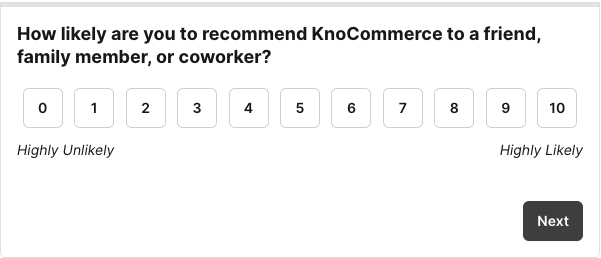
These surveys are typically sent independently of recent purchases and are designed to measure long-term brand perception and customer sentiment across your full customer journey.
Tracking your NPS scores and establishing an internal benchmark allows brands to measure progress over time.
Unsolicited feedback
Unsolicited feedback often comes through customer support emails, help tickets, social media comments, reviews, or product returns.
This type of feedback highlights recurring pain points, unmet expectations, and moments where customers may feel dissatisfied. Many of these moments tie directly to the real reasons customers hesitate before buying.
Logging unsolicited comments alongside structured survey responses creates a unified view of your customer satisfaction score, helping brands proactively resolve issues before they escalate.
Why customer feedback surveys drive business
To scale an ecommerce brand, customer feedback surveys must be part of your post-purchase systems.
These surveys help brands connect with customers and measure real experiences, while also uncovering areas that need improvement for future shoppers. Customer feedback highlights recurring issues, unmet expectations, and opportunities to refine the customer experience.
Customer surveys can also work alongside customer reviews to strengthen trust and credibility. Research shows, 95% of consumers consult reviews before making a purchase, and 30 percent research reviews for every purchase they make.
Customer loyalty plays a major role in sustainable ecommerce growth. Feedback surveys help brands refine retention strategies without relying solely on increased acquisition spend.
Customer loyalty plays a major role in sustainable ecommerce growth. Feedback surveys help brands refine retention strategies without relying solely on increased acquisition spend.
But surveys only drive business when insights are connected to the rest of your tech stack.
KnoCommerce’s native integrations with Shopify, Klaviyo, and other ecommerce tools ensure survey data doesn’t sit in isolation. Instead, responses are tied directly to order history, product data, lifecycle stage, and acquisition source.
That means brands can:
- Identify which marketing channels drive high-satisfaction customers
- Compare NPS or CSAT by product or SKU
- Segment customers based on sentiment or satisfaction level
- Personalize onboarding and retention flows using real feedback
From there, our Actions feature turns insights into automated workflows. Instead of manually reviewing survey responses, brands can automatically:
- Route detractors to support before churn escalates
- Trigger retention campaigns for customers with low satisfaction scores
- Tag promoters for referral or loyalty programs
- Push feedback into Slack, Google Sheets, or CRM tools
And through Zapier, survey responses can extend even further, syncing with hundreds of additional platforms to create cross-functional visibility across marketing, CX, and operations.
When integrations and Actions work together, survey data becomes operational infrastructure not just reporting.
Customer motivations change over time, and the most reliable way to stay ahead is by asking. A customer feedback survey gives brands the data needed to make strategic decisions rooted in what customers are actually saying.
Ultimately, the goal of customer feedback surveys is to improve the customer experience across every touchpoint. Customer feedback surveys impact more than experience. They directly influence growth.
Challenges of customer feedback surveys
One of the biggest challenges ecommerce brands face is low response rates. A poorly designed customer feedback survey with too many questions or unclear intent will often be ignored.
Another common issue is biased responses. Leading questions can skew results and make feedback less reliable. Questions should be neutral and allow customers to answer honestly.
And finally, another common challenge is failing to act on the data. Collecting customer feedback is only half the work. The real value comes from analyzing responses and connecting insights back to key business KPIs.
How to design your customer feedback survey
The best customer feedback survey is one that customers actually finish. So how do you make that happen?
Start by limiting the number of questions and ensuring each one serves a purpose. Every question should lead to actionable insight that informs a specific decision or strategy.
Timing also matters. Surveys should be sent when customers are most likely to respond, but not so late that the experience fades. The goal is to hold attention long enough for completion without overwhelming the respondent.
Ecommerce brands can deploy surveys in several ways:
- On-site surveys that appear after checkout
- Full-screen surveys shown post-purchase
- Link-based surveys sent through email or SMS
Each format has its place depending on the type of feedback you want to collect.
The essential customer feedback survey questions
Before writing questions, define the goal of your customer feedback survey. Ask yourself what decision this data will support and how responses will be used.
Common objectives include:
- Understanding the purchase experience
- Learning where customers discovered your brand
- Identifying why customers chose your site over alternatives like Amazon
Next, select the right question types based on your survey goal. Then determine your audience. Are you surveying first-time buyers, repeat customers, or lapsed customers?
Clarify what aspect of the business you are asking about, whether it’s a specific product, service interaction, or overall experience.
If you are unsure what to ask, KnoCommerce offers over 200 vetted survey questions organized by vertical. You can explore examples in this ecommerce survey questions guide or browse the full post-purchase survey question library.
The best tools for customer feedback surveys
Customer feedback surveys help ecommerce brands gauge how customers react to their brand and understand how customers actually think about their experience. While analytics tools show what actions a customer takes on your site, they only tell part of the story. Surveys complete the picture by adding context behind those actions.
In fact, “the average ecommerce conversion rate sits around 2.7%, but brands using optimization and customer survey tools see an average ROI of 223%,” which highlights the impact feedback tools can have when paired with performance data.
The best customer feedback platforms make it easy to design and manage surveys while integrating with your existing tech stack. The most effective brands rarely rely on a single source of insight.
Not all feedback tools are built the same. Some help you understand why customers buy. Others focus on social proof. A few help you turn feedback into measurable growth.
Here are the top 5 survey tools:
1. KnoCommerce — For post-purchase surveys that drive action
Kno transforms ecommerce customer surveys into strategic insights. It helps brands go beyond vanity metrics and uncover what actually drives sales, loyalty, and retention.
Built specifically for ecommerce, KnoCommerce connects survey responses directly to order data, acquisition channels, and lifecycle stagel, making it easier to measure impact across the entire customer journey.
Key features:
- Pre-built survey templates for attribution, product feedback, and brand perception
- Segmentation and analytics dashboards to track performance across channels
- Klaviyo integration for automated email surveys and sentiment-based flows
- Deep Shopify Checkout integration to trigger surveys instantly after purchase
- Custom logic to tailor questions based on order value, new vs. repeat customers, or SKU
KnoCommerce doesn’t just collect feedback, it activates it.
2. Yotpo — For reviews and UGC that build trust
Yotpo focuses on user-generated content and product reviews that increase credibility and drive purchase confidence.
Key features:
- Automated review requests via email or SMS
- UGC widgets to display verified photos and videos
- AI-powered moderation for faster approvals
- Loyalty and referrals integration to reward reviewers
- Google Shopping and Rich Snippet support for SEO visibility
Yotpo is often used by brands looking to strengthen social proof across PDPs and marketing channels.
3. Loox — For visual product reviews that sell
Loox is designed to make customer content visually persuasive and conversion-focused.
Key features:
- Automatic post-purchase photo review requests
- One-click widgets for PDPs and homepages
- Referral incentives for customers sharing photos
- Carousel galleries for lifestyle-style UGC
- Full branding control to match your store’s design
Loox works well for brands prioritizing visual storytelling and authentic customer imagery.
4. Stamped — For reviews + loyalty that work together
Stamped blends product reviews with loyalty programs and referral tools, helping brands centralize customer engagement initiatives.
Key features:
- Combined dashboard for reviews, NPS, and loyalty data
- Q&A module to answer pre-purchase questions
- Points-based loyalty program integrated with Shopify
- Automated review and loyalty flows via email or SMS
- Review syndication across Google Shopping and other platforms
Stamped is typically chosen by brands that want reviews and rewards under one roof.
5. Okendo — For all-in-one customer marketing
Okendo offers a broader customer marketing suite that blends feedback collection with personalization tools.
Key features:
- Product quizzes tied into rewards programs
- Automated post-purchase survey flows via Shopify events
- Video and photo reviews synced directly to Shopify
- Incentive engine for verified reviewers
- Customer profiles synced with Klaviyo for lifecycle personalization
Okendo is often positioned as a comprehensive engagement platform rather than a standalone survey tool.
As research shows, “the most successful ecommerce brands use more than one customer feedback tool. Combining post-purchase surveys, reviews, visual content, NPS scores, and UX insights gives you a complete view of what drives your customers.”
What to do with your customer feedback surveys
Collecting responses is only the first step. The real impact comes from how you analyze and apply the data.
Customer feedback surveys can inform improvements across four key areas:
- Behavioral insights such as motivations and habits
- Attribution insights that reveal what drove the purchase
- CRO feedback tied to the customer experience
- Product development insights that guide future launches
Segment your data by channel, product, or customer type to uncover trends. Look for recurring themes, emotional language, and repeated objections or motivators.
Breaking feedback into actionable segments makes optimization decisions clearer and more effective.
Metrics and KPIs to track
Tracking the right metrics helps you understand not just how much feedback you collect, but how effective your surveys are at capturing meaningful insight.
Response rate
Response rate measures the number of survey responses divided by total views. Tracking this metric helps identify whether customers are engaging or dropping off.
At KnoCommerce, brands see an average 45 percent response rate, though results vary based on timing, format, and audience.
Completion rate
Completion rate measures how many respondents finish the survey. It is calculated by dividing total submissions by total responses.
According to our data, “this rate stabilizes between 85% and 95%. If you’re seeing a completion rate significantly below that, it may be useful to take a look at your survey and either redesign the survey flow or re-prioritize question order for more important data.”
NPS scores
For relationship-focused feedback surveys, Net Promoter Score (NPS) is a key metric.
NPS measures customer loyalty by asking how likely someone is to recommend your product or brand. This question taps into whether customers would put their reputation behind your product, offering deeper insight than satisfaction alone.
How Loop uses post-purchase surveys across the business
Loop created post-purchase surveys to understand customer behavior, refine their marketing campaigns, and shape product development.
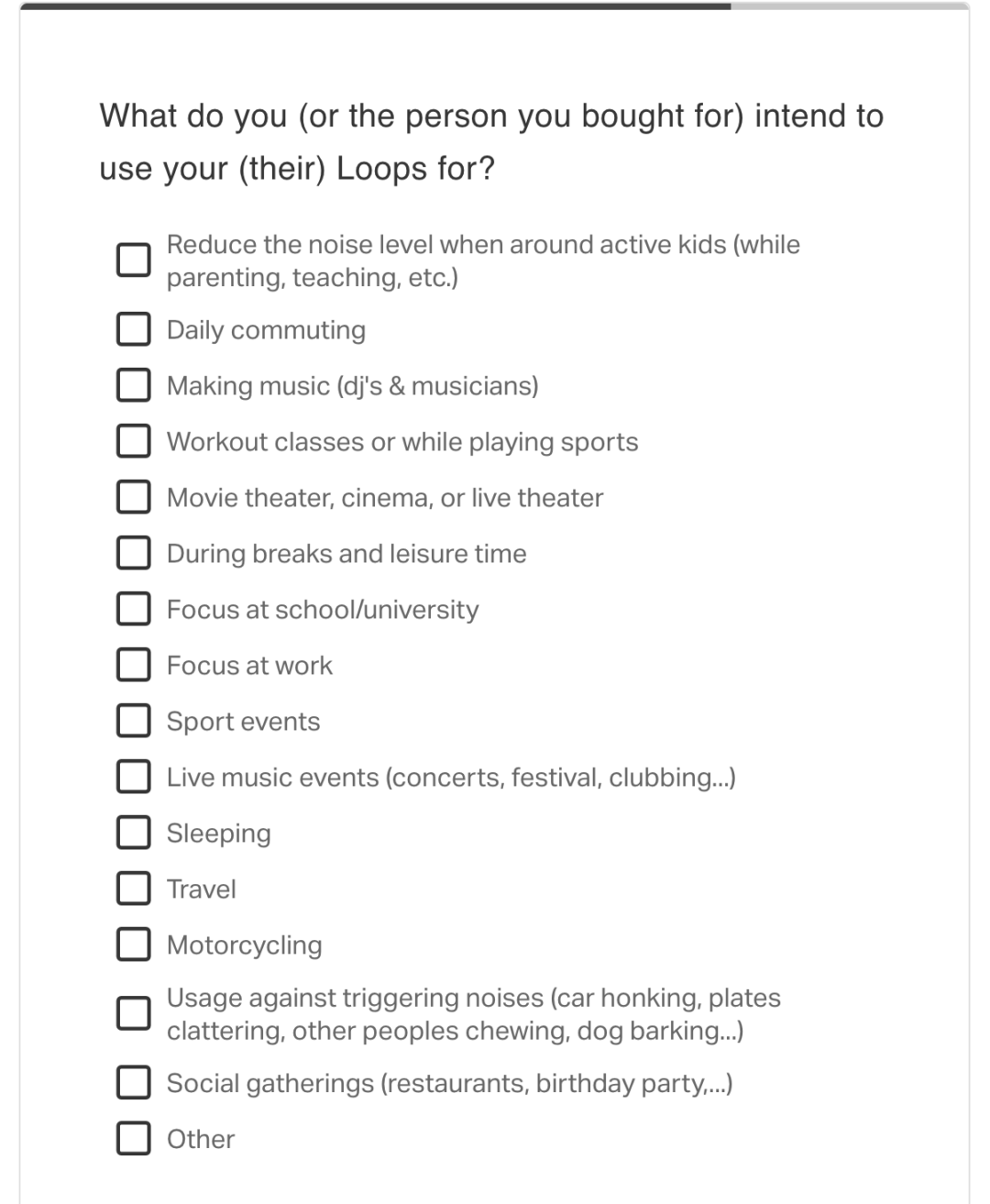
By segmenting customers into first-time buyers and repeat purchasers, they tailored survey questions to each group.
- First-time customers provide insights into brand awareness and initial purchase drivers
- Returning customers help Loop understand repeat purchase behavior and what keeps them coming back
“We split up our customer base because first-time and repeat customers have very different motivations. It helps us understand not just why they buy, but what they’re looking for in our products over time.”
Future of customer feedback surveys
Customer feedback will always be a channel for sharing positive and negative experiences. For brands, it remains one of the most valuable sources of customer insight.
The future of customer feedback surveys lies in speed and responsiveness. Customers expect to share feedback easily, and brands must be able to act quickly to resolve issues and personalize experiences.
Customer feedback surveys provide a direct line into customer motivations, expectations, and decision-making. When used strategically, they become a long-term growth lever rather than a one-time data collection effort.
Book a demo to see how KnoCommerce helps ecommerce brands turn customer feedback into actionable insight across the entire customer journey.